
Technology
Artificial intelligence giant Anthropic files papers to sell shares to the public for the first time
By Katherine Langford
KSTP 5
Advertisement · Why this ad?
Marcus manages the day-to-day editorial workflow across all brands, coordinating coverage assignments and ensuring editorial standards are met. He previously served as city editor at the Pioneer Press and holds a degree in Political Science from Carleton College.
More from Marcus →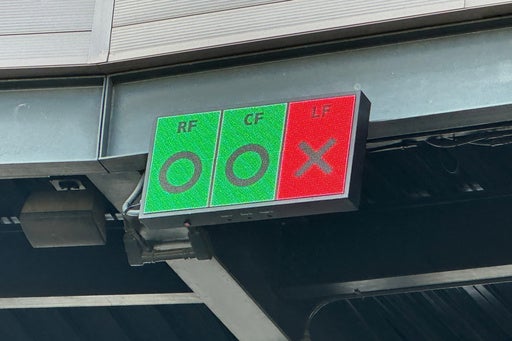
MLB testing outfield positioning rules in minors as quest for more offense continues By DAVID BRANDT The Associated Press In this photo taken with a smartphone, a video board above home plate at Salt River Fields shows outfielders if they are in the correct Thursday, Oct. 22, 2026, in Scottsdale, Ariz. (AP Photo/David Brandt) SCOTTSDALE, Ariz. (AP) — Minnesota Twins prospect Kyle DeBarge walks a few steps to a worn-out patch of grass while playing center field during a recent Arizona Fall League game at Salt River Fields, glancing up at a small video board that lets him know if he’s in the right spot.A few steps to his left, right, front or back and a big red “X” appears on the video board above home plate. That’s not good.If he stays on that little island of dirt in a sea of grass, a big ‘O’ appears and the video board is green. Much better.Welcome to Major League Baseball’s newest experiment in its long-running quest to juice the game’s sluggish offense: Restricting the positioning of outfielders on every at-bat. The idea is that making outfielders play straight up — instead of adjusting for individual hitters’ tendencies — will lead to more doubles and triples.“The hardest part is cutting off doubles in the gap and they’re even turning into triples,” DeBarge said. “That’s what they told us they wanted in the beginning. So it works.”Infielders also have new positioning requirements when there are no runners on base, limiting how much they can shift for a hitter’s tendencies.The Arizona Fall League has long been a testing ground for the next generation of MLB players, and lately, it’s also been a venue for testing potential rules changes. As an example, the AFL was experimenting with the current Automated Ball-Strike system long before it hit the big leagues in 2026.MLB feels that the AFL is a good opportunity to test rules in a relatively low-stakes environment. The league declined official comment on the most recent experiment, and any change to big-league rules would still be years away.The outfield positioning experiment is limited to just games that are played at Salt River Fields, since it has similar technology to MLB parks.“We talked to our guys about embracing it, it only happens in our ballpark, so embrace it and move on,” Salt River manager Ted Tom said. “There’s going to be some things that we’ve never seen before. That’s OK, just keep playing.” MLB still searching for more offenseThe rules package that MLB debuted in 2023 has widely been seen as a success. The pitch clock was the biggest change — and drastically reduced game times — but there were also tweaks that included rules on infield shifts, bigger bases and a limit on how many times a pitcher could disengage from the rubber.The idea was to make the games faster and increase offense.The former objective was definitely achieved. The latter, not so much.Most of MLB’s offensive numbers have barely budged since the new rules package was debuted. Game times are about 25 minutes shorter and stolen bases are up, but batting average (.243 in 2022 and .244 in 2026), runs per game (4.28 in 2022, 4.48 in 2026) and hits per game (8.16 in 2022, 8.20 in 2026) haven’t changed much.The lack of offense is even more stark during MLB’s postseason. Through Game 2 of the World Series, teams have combined for a .216 batting average through 37 games.A good pitcher’s duel certainly has its merits, but the occasional 12-8 score can keep fans engaged, too. Doubles and triples are exciting, and MLB wants to see more of them.“The pros are that you’re never out of the game, it’s very exciting for the fans and there’s lots of action, which is part of the intention,” Tom said. Doubles, triples galoreThe experimental rules force outfielders at Salt River Fields to play much more shallow than they would in most situations, which means they are forced to go back on fly balls much more often than normal.The flip side is that there are almost no bloop singles.“It’s a give and take,” Washington Nationals prospect Teo Banks said. “Your first move is always back with how shallow you are — lots of running. But I think there’s some part of strategy that’s taken away with something like this.”Banks wasn’t kidding about the running. The left fielder was discussing the new rules after Scottsdale beat Salt River 15-8 during Thursday’s game that featured five triples — which was an AFL record.There’s little question that the experiment is having an effect. But is it too much of a change?Tom — the Salt River manager — thought about the question for a moment and then gave a little grin before mimicking a zipper across his lips.Some things are better left unsaid.___ See AP’s full MLB coverage here Copyright 2026 The Associated Press. All rights reserved. This material may not be published, broadcast, rewritten or redistributed without permission.
By Katherine Langford
KSTP 5
By Marcus Chen
KSTP 5

By Katherine Langford
Twin Cities Business

By Marcus Chen
KSTP 5